|
|
||
|
Dragonflies For a while it was the butterfly, then the hummingbird – you found them on all sorts of home and fashion items, from wind chimes to jewelry. In the last couple of years the dragonfly has found itself the new darling of design. Strangely enough, the dragonfly has never received much attention from anglers or in angling literature. But the dragonfly is a major species in virtually all lakes and ponds, and even in some streams.
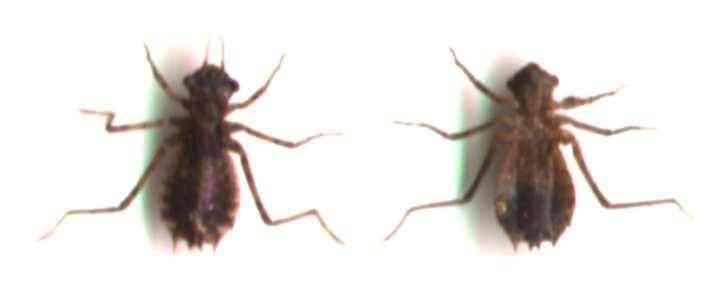
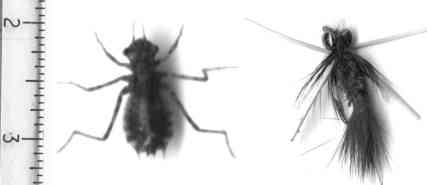
Above: Dragonfly nymphs, top view at left, bottom view on right. I usually fish dragonfly nymph imitations with a varied retrieve to imitate the natural – a countdown to allow it to sink, the short twitching strips to imitate the stalk, with occasional quick strips to match the “jet propulsion.” Large wet flies, like a Dark Cahill; work well as an imitator. A favorite western pattern is the Carey Special, a chenille-body with long pheasant hackle. Perhaps the best imitation is the Rubber-Legged Dragon ( or RLD as it’s known by many), developed years ago by Callaway guide, Carter Nelson. Dragonfly nymph at left, the Rubber-Legged Dragon on right. The dragonfly nymph is a stalking predator. Stalking predators move very slowly, with lots of pauses and hesitations, and practically never with a regular rhythm. So that's the way we fish the RLD..........slow................. no slower than that......now, about half that fast and you'll be about right. If they don't eat, lengthen the leader and fish it, yep, you guessed it,slower.
|
Inquiries to
kent@flyfishga.com
Accessed times.